








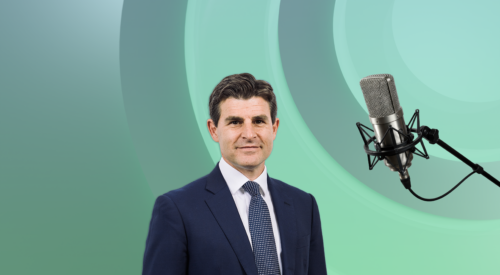
You may have already listened to the How I Invest podcast. Hosted by investor and entrepreneur David Wisburd, the audio series aims to bring LP and GP perspectives together. ICG’s Co-Head of LP Secondaries, Ryan Levitt, recently sat down with Weisburd to discuss how private equity secondary investments have evolved.
Watch
Listen
Ryan Levitt, Co-Head, LP Secondaries, speaking on the podcast, commented:
You have more new entrants into the secondary market, particularly on the GP side. New capital, new entrants, shorter track records. It’s going to lead to wider dispersion of returns.
Not everyone can deliver first quartile returns — it’s not the way quartiles work. You’re always going to have first through fourth.
Fundraising is inefficient. Access is inconsistent. Information is inconsistent. Investment judgment varies widely. All those reasons and more I think contribute to return dispersion.
I think short-termism is a challenge in finance much like every other industry. You know, are you making investments and building a durable investment business that’s designed to last decades or are you trying to raise a really big fund, invest as much as possible quickly and see how much you can get over the next two or three years? I think it’s why track records matter. It’s why team longevity matters.
It’s why every investor in private markets pays attention to track record of the senior team, the longevity of a senior team, the tenure of a senior team. Historically, that’s been your best predictor of success.
Key topics explained and expanded on in the podcast
- Why secondaries have historically compared favourably to buyouts, on a risk-adjusted basis
- Why information and access, not sourcing, drive competitive advantage in secondaries
- How distributions to paid-in capital (DPI) challenges are driving secondary market activity
- Why who you work for, and who you work with, matters more than what you do
- Why the secondary market today may be where the bond market was before electronic trading
Go deeper
- Read Ryan Levitt and Oliver Gardey on how secondary investments can help a private wealth investor’s diversified portfolio
- Explore ICG’s LP-led private equity secondaries strategy
- Find out about ICG’s partnership with Amundi, Europe’s largest asset manager
- Listen to other episodes of David Weisburd’s How I Invest podcast
Past performance is not a reliable indicator of future results.





 Back
Back