






Assets are anything that has a commercial or exchange value that is owned by a business.
Private wealth at ICG opens up alternative assets such as private equity secondaries, credit and real assets to private investors through our trusted partners, leveraging our platform that invests across the capital structure and creates value through economic cycles.
Our objective is to allow eligible individual investors to access and build a diversified portfolio of ICG strategies through trusted partners and investment platforms.
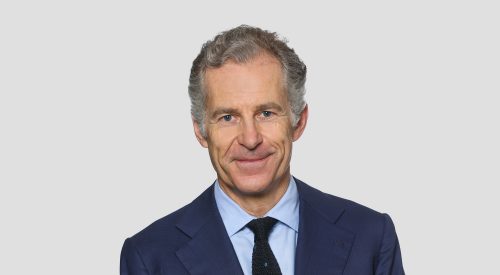
We are proud of our reputation for an unwavering focus on delivering superior investment performance, and we are excited to develop products and strategies that are well-suited to the important and growing wealth market for private investments.
Benoît Durteste, CIO and CEO of ICG, ICG-Amundi partnership announcement, 18 November 2025
We are a global alternative asset manager with more than three decades of experience generating attractive returns.
We operate from over 20 locations globally and invest our clients’ capital across Structured Capital; Private Equity Secondaries; Private Debt; Credit; and Real Assets.
Our exceptional people originate differentiated opportunities, invest responsibly, and deliver long-term value.
We partner with management teams, founders, and business owners in a creative and solutions-focused approach, supporting them with our expertise and flexible capital.
(31 December 2025)
ICG was founded in 1989 on the principles of flexible investment solutions, specialist experience and local knowledge. The values we established back then still hold true today.
We are proud of our long-term relationships with our clients and portfolio companies, as we are proud of our returns.
Over time, we have broadened our specialist strategies and our global reach. Today our waterfront of products is broad and attractive.
Since 2015 our AUM has grown by more than 740% from $15bn to $127bn. Of the $24bn we raised during the year to 31 March 2025, 5% came from private investors via a range of institutional partners. As we look ahead, we aim to expand opportunities for eligible private investors by opening access to our award winning strategies.
Supporting this growth, we have continued to invest in our platform – we now have 686 employees globally and operate out of 22 locations in North America, Europe, Asia-Pacific and the Middle East.


Raised from wealth channel
Five years to 30 Sep 2025

Annual increase in wealth channel fundraising
$1.9bn raised in year to 31 March 2025, +24% year on year

Wealth manager clients
4% of our 812 institutional clients at 30 Sep 2025
Key portfolio managers from investment teams offering private wealth solutions. Almost 300 executives and managing directors work within ICG investment teams, speaking 25+ languages and based across Europe, North America and Asia-Pacific regions. They are supported by 400+ professionals from functions such as our Client Solutions Group, Client Reporting, Product Development, Legal, Compliance & Risk, Operations, Technology, Sustainability, Tax, Internal Audit, Corporate Development and Shareholder Relations, Treasury and Corporate Affairs.



Interested in partnering with ICG around private wealth or want to find out more? Please email us.
Contact us








Key terms and their definitions
Assets are anything that has a commercial or exchange value that is owned by a business.
Assets Under Management or AUM is the total market value of all financial assets that an individual or financial institution manages on behalf of investors.
Common equity is the value of a company’s assets minus its liabilities, which belongs to the shareholders.
Diversification is the practice of investing in a variety of investments. A diversified portfolio can be a risk management technique and contains a mix of distinct assets and investments to offset losses from any single asset class, thereby lessening the impact on the overall portfolio.
Dilutive refers to a reduction in the ownership percentage of existing shareholders due to the issuance of additional shares.
Earnings Before Interest, Taxes, Depreciation and Amortisation (EBITDA) is a widely used measure of corporate profitability.
Shares of ownership in a company which are listed on an exchange are referred to as equity.
Harvesting is the process during which a fund is selling its investments to realise profits (through methods like selling to another company or taking the company public).
Internal Rate of Return or IRR represents the annualised rate of return expected from the investment.
The phase when a fund actively puts money into various companies to grow its portfolio is known as investing.
The use of borrowed capital in an effort to increase the potential return of an investment is known as leverage. The use of leverage is likely to increase any losses. Furthermore, fees associated with borrowing may decrease fund performance.
Multiple on Invested Capital or MoIC is a financial metric that measures the total value generated by an investment relative to the initial capital invested. It is calculated by dividing the total cash inflows (e.g. exit value) by the total cash outflows (e.g. initial equity contribution).
Net IRR (Internal Rate of Return) is a performance metric that measures the profitability of an investment after accounting for fees, carried interest, and other expenses. It provides a more accurate reflection of an investment’s true potential compared to the traditional IRR, which does not consider these costs.
Net MoIC (Multiple on Invested Capital) is a financial metric that measures the total value generated by an investment relative to the initial capital invested, after accounting for fees, carried interest, and other expenses. It provides a clearer picture of the actual returns to investors by considering the costs associated with managing the investment
Senior debt is debt that must be repaid first if a company goes bankrupt. It has the highest priority over other debts and is often secured by collateral.
Structured debt is a customised debt arrangement designed to meet specific financial needs, often involving complex financial instrument.
Secured structured debt is structured debt that is backed by collateral, reducing the lender’s risk.
Vintage is the year when a private equity fund is launched and/or starts making significant investments.


 Back
Back